All Episodes

Displaying 1 - 20 of 45 in total

#46

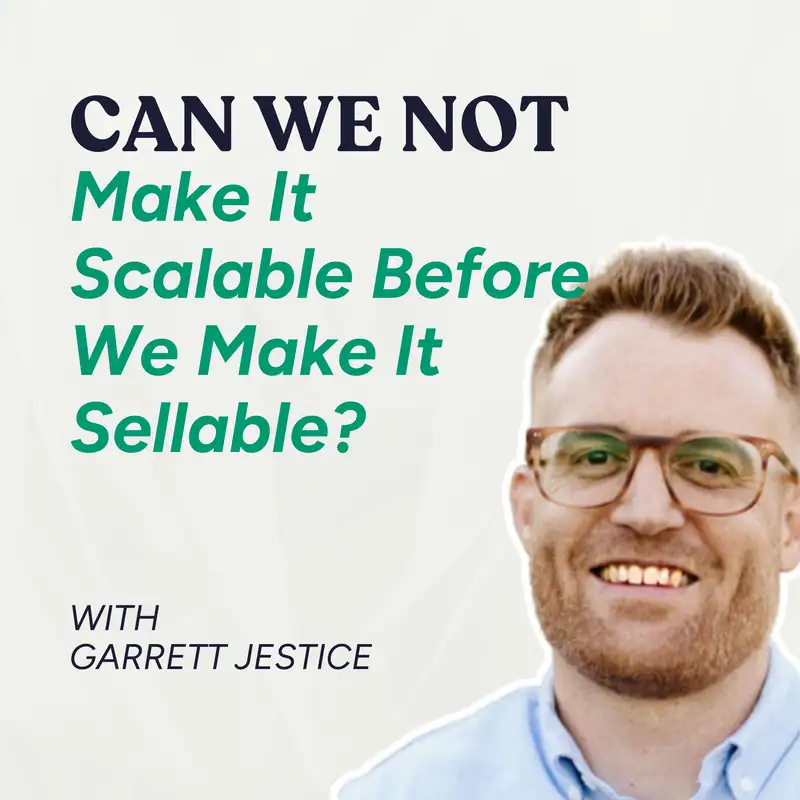
Can We Not Make It Scalable Before We Make It Sellable?

Garrett Jestice has a framework for service businesses that is painfully simple: Discovery → Focus → Expansion. The problem is that a lot of founders skip the first two and head straight for expansion. New offer. New funnel. New hire. New marketing channel. New tech stack. More content. More networking. And sometimes the real issue is that the business still has not proven what people actually want to buy. In this episode, Garrett and I talk about how to find offer-market fit, why passive marketing takes longer than most founders want to admit, how to know when you are actually ready to scale, and why throwing more money at agencies, salespeople, or marketing rarely fixes a clarity problem. We also get into the less polished side of growth: working too much, hitting the fractional ceiling, getting distracted by vanity metrics, and building a business that gives you freedom of time instead of just more revenue. Garrett also shares a client story about spending more than $100K on marketing without getting results, and what actually had to change before growth started working. In this episode, we cover: Garrett’s Discovery → Focus → Expansion framework what offer-market fit actually means for a service business why founders jump into scaling too early active vs. passive marketing why networking does not automatically equal business development intro offers and when free work can actually make sense the fractional ceiling and the limits of selling your time why viral content and revenue are not the same thing what founders should own before blaming a salesperson, agency, VA, or contractor building a business around proof instead of assumptions One line worth remembering: Your business does not always need another offer. Sometimes it needs you to pay attention to what people are already trying to buy.
#45

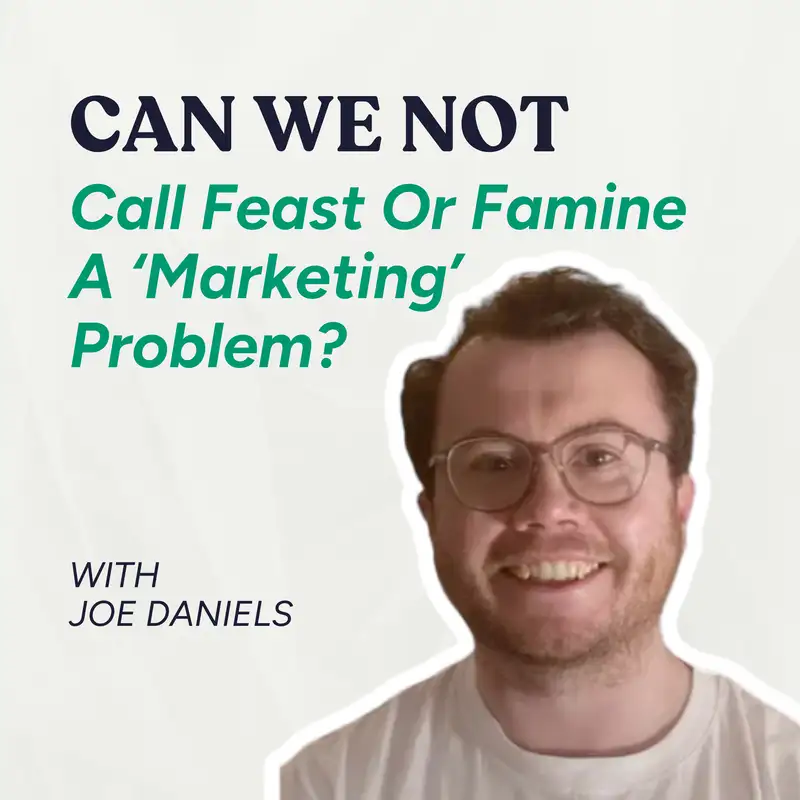
Can We Not Call “Feast or Famine” a Marketing Problem?

Joe Daniels thinks a lot of solo business owners are trying to solve the wrong problem. When business slows down, the instinct is usually to blame marketing. But if you had a "feast" before the famine, your marketing clearly worked at some point. The bigger question is why it stopped. In this episode of Can We Not?, Joe and Sam dig into the operational side of running a solo service business, including the parts founders often ignore because they'd rather focus on the work they're actually good at. Joe shares how his experience as the first employee at a marketing agency showed him the feast-and-famine problem firsthand, why he eventually realized he'd built a business he enjoyed talking about more than actually running, and the quarterly review that led him to change direction. They also get into: Why founders need both a visionary hat and an operator hat Joe's Direction, Demand, and Delivery framework Why feast and famine can be an operations problem rather than a marketing problem How Joe used the Odyssey Plan to rethink his own business Why "I don't have time" is often really "I didn't make time" Making uncomfortable business-development work small enough to actually do Designing an offer around the business and life you want Joe's Do, Delegate, Die approach to simplifying work Why telling prospects they're not a good fit sometimes makes them want to hire you even more If you're good at your actual work but occasionally wonder when exactly you became responsible for running an entire company around it, this conversation is for you.
#44

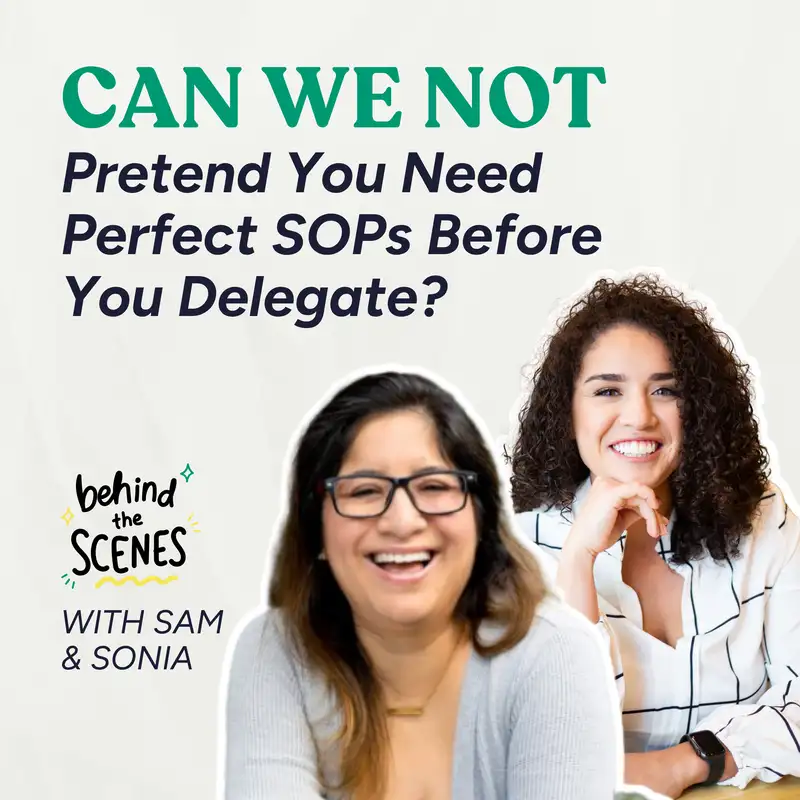
Can We Not Pretend You Need Perfect SOPs Before You Delegate? Behind the scenes with Sam & Sonia

What happens when your five-month onboarding plan suddenly becomes three months, your processes are outdated, you decide to launch an entirely new internal app, and then you leave the country for 10 days? Apparently, you onboard an operations manager. In this behind-the-scenes episode, Sam is joined by Auxo Operations Manager Sonia Narvaez to break down what actually happened during Sonia’s onboarding. And no, it did not involve handing her a beautiful binder of perfectly documented SOPs. They talk about the original plan, why it blew up, what they did instead, and how Sonia went from helping with a project to running point on the business while Sam was mostly offline. More importantly, they dig into why founders often focus on the wrong things when preparing to delegate. Documentation can help, but it cannot replace clarity, communication, trust, and giving someone enough context to understand how the business actually works. In this episode: Why Sam originally planned five months to onboard an Operations Manager What happened when that plan suddenly got cut almost in half Why outdated or nonexistent SOPs didn't derail the onboarding The communication cadence Sam and Sonia used during the first few months Why overcommunicating with a new team member is usually better than trying not to “bother” them How they handled trust, access, permissions, and decision-making The pre-vacation “everything in my brain” roll-up that helped Sonia take over What Sonia ended up handling while Sam was away for 10 days Why knowing the desired outcome matters more than prescribing exactly how someone gets there How healthy disagreement helped them build a stronger working relationship The difference between hiring someone to complete tasks and bringing someone into the business as a real team member If you've been telling yourself you'll hire an assistant, VA, or operations person after you get all your processes cleaned up, this episode may ruin that excuse.
#39

39. Can We Not Be the Reason Our Assistant Fails? Three Crucial Calls for Clarity

You’ve hired an assistant before. It didn’t stick. And if you’re honest, you’re not totally sure why. Host Samantha C. Prestidge of Auxo Business Services breaks down the three areas of clarity founders need to have in place before they bring on an assistant — and why skipping them is almost always what tanks the working relationship. This solo episode gets into why even strong assistants fail when founders aren’t ready, the difference between delegating tasks and delegating outcomes, and the Map It → Keep It → Delegate It framework Sam uses with her own clients. Topic Bullets Why building SOPs before you hire is the wrong starting point — and what to do instead The “cart before the horse” pattern that ends most assistant relationships early What “how you want to play in your business” actually means — and why founders who skip it become micromanagers How to write a value statement that ties your assistant’s work to real business outcomes, not just your to-do list When “I can’t grow because I’m at capacity” is actually a clarity problem, not a bandwidth one The Map It, Keep It, Delegate It framework Book a delegation strategy session: auxosvs.com/strategy Timestamps 00:00 Hidden Expectations 00:21 Podcast Mission 01:49 Delegation Failures 03:31 Skip The SOP Trap 04:52 Three Clarity Areas 05:08 Map What Youre Building 07:18 Keep Your Founder Role 09:13 Delegate Outcomes Not Tasks 11:49 Map Keep Delegate Framework 12:27 Book A Strategy Session
#38

38. Can We Not Keep Marketing to Everyone and Serving No One? | Finding the Right Operations Partner with Ashley Connell

Hiring operations help for your small business is harder than it should be — and most founders are looking at the wrong things when they do it. Ashley Connell, CEO of Prowess Project, has spent seven years matching small business owners with operations partners. She's learned that the skills on a resume tell you almost nothing about whether someone can actually run your business alongside you. In this episode: Why hiring for tech stack and job titles fails service-based business owners How to find the right operations partner for your small business The four-step framework Ashley's ops partners use from day one Why delegating outcomes doesn't work — and what to communicate instead How to know if you need an operations partner or if your processes need fixing first What a two-week time study reveals that no hiring process can 00:00 The Need for Management 00:41 Welcome to Can We Not 01:41 Meet Ashley Connell 02:22 What is an Ops Partner 04:46 Meeting Leah 05:42 Flexible and Fulfilling Careers 06:59 The 97 Percent Statistic 07:38 The Matching Algorithm 10:47 Proven Results and Success Stories 13:14 Overcomplicating the Journey 15:38 Niching Down to Accounting Firms 17:22 Testing and Experimentation 19:22 Naming the Ops Partner 21:20 Experimentation With Intent 22:35 Accountability and Feedback 26:06 Four Step Delivery Method 29:03 Setting Clear Expectations 32:24 Behaviors Over Outcomes 34:28 Practical AI Integration 36:29 Time Study to Simplify 38:40 Closing Thoughts
Previous Page

Displaying 1 - 20 of 45 in total

Next Page